One question comes up at almost every Ultherapy consultation: how does Ultherapy work? Focused ultrasound energy is delivered beneath the surface of the skin, and the heat it creates is what prompts your body to build new collagen. But that answer alone doesn’t cover what people actually want to know before they book. Does it hurt? How long until you see a difference? Is it the same as the HIFU treatments other clinics offer? And does it actually work, or is it another overhyped non-surgical promise?
The glossy version skips the parts people actually want to know. This post covers it all: the mechanism, the sensation, the timeline, and what separates a properly delivered Ultherapy treatment from a rushed one.
How Does Ultherapy Work, Really?
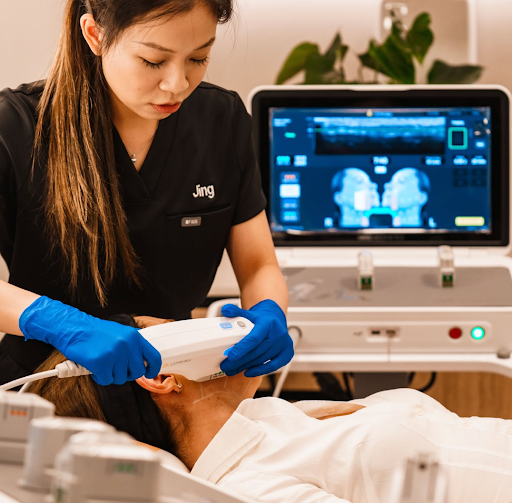
Ultherapy uses micro-focused ultrasound to deliver energy to specific depths beneath the skin, depths that correspond to the same structural layers addressed in surgical facelifts. At those depths, tiny points of thermal energy are created. Your body responds by laying down new collagen in place of what the heat disturbed.
The key depths targeted are 4.5mm (the SMAS layer, the deep foundation of the face), 3.0mm (the deeper dermis), and 1.5mm (the superficial dermis for fine lines and texture). A real-time ultrasound imaging system lets the practitioner see exactly where the energy is being placed.
No cutting, no injecting, no disruption to the skin’s surface.
Does Ultherapy Hurt?
It depends on the area being treated and the depth of energy being used.
Most people describe the sensation as brief pulses of warmth or a sharp prickling, particularly over bony areas such as the jawline and cheekbones. On a pain scale, most clients rate it between 3 and 5 out of 10. It is not a comfortable treatment, and clinics that describe it as painless are overselling it.
Experienced practitioners can adjust the energy settings and pacing to manage discomfort. Some clients take an over-the-counter pain reliever beforehand. The sensation stops the moment the device moves on.
Your Ultherapy Treatment Burwood Appointment: What to Expect
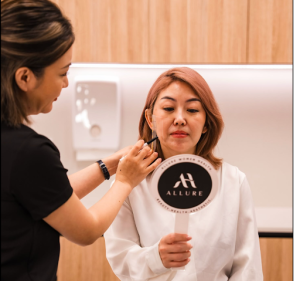
Your first Ultherapy treatment Burwood appointment is a 30-minute consultation. The team assesses your skin, discusses your goals, and confirms whether Ultherapy is the right fit. Treatment is booked as a separate appointment.
On treatment day, the skin is cleansed and ultrasound gel is applied to the areas being treated. The practitioner uses the Ultherapy device to deliver energy across the planned zones, using real-time imaging to guide placement. Sessions typically run 60 to 90 minutes depending on the areas covered.
You can drive yourself home. No recovery time is needed.
At Aesthetics by Allure, every practitioner is trained by Zoe Li, the official Ultherapy clinical trainer for Merz across Australia and New Zealand. This means the techniques being used at this clinic are the same ones being taught to practitioners across the country.
When Will You Actually See Results?
This is where a lot of people feel let down, not because the treatment doesn’t work, but because nobody set the expectation clearly.
Ultherapy does not produce instant visible change. The collagen-building process it triggers takes time. Visible improvement builds gradually, usually from the six-week mark through to three months. Some clients continue to see gradual improvement for up to six months after treatment.
It will not replicate what surgery does. The lift is real, but it works within the range of what collagen remodelling can achieve. Skin that sits higher on the face, with a jawline and brow line that look more defined. How long results last varies by individual, but most clients return for a maintenance session annually.
A long-term clinical study tracking patients after treatment found continued improvement in facial and neck skin laxity over time, consistent with the gradual timeline described here.
Is Ultherapy the Same as HIFU?
Broadly yes, with a meaningful difference. HIFU stands for High Intensity Focused Ultrasound. Ultherapy is a specific FDA-cleared HIFU device made by Merz Aesthetics. Other HIFU devices exist (including Ultraformer, which Aesthetics by Allure also offers), and they work on the same principle.
People often ask how does Ultherapy work compared to standard HIFU devices. The answer comes down to imaging. Ultherapy uses a built-in ultrasound visualisation system, allowing the practitioner to see the tissue layers in real time. Generic HIFU devices often do not. That distinction matters for precision and safety.
Who is a Good Candidate for Ultherapy?
Ultherapy suits people with mild to moderate skin laxity who want to address the early signs of ageing without surgery. The ideal candidate is typically in their late 30s to mid-50s, though this varies depending on the individual’s skin condition.
Anyone considering Ultherapy treatment in Burwood should book a consultation first to confirm suitability. A good cosmetic clinic Burwood clients return to will tell you if Ultherapy is not right for your concern and suggest an alternative if needed.
Common areas people treat include:
- Sagging brow or hooded appearance
- Loose skin under the chin or along the neck
- Softening of the jawline or early jowling
- Lines and texture across the décolletage
What is the Best Skin Clinic Burwood has for Ultherapy?
The best skin clinic Burwood offers for Ultherapy is one where the practitioner has both the device and the depth of training to use it correctly. Aesthetics by Allure is the only clinic in Australia and New Zealand that is home to Zoe Li, the national Ultherapy clinical trainer for Merz. The team at Allure is trained to a standard that other clinics across Australia are benchmarked against.
When choosing where to have Ultherapy, training credentials matter more than pricing or proximity. The treatment outcome depends almost entirely on how well the energy is placed.
What Should You Avoid After Ultherapy?
Downtime is minimal, but there are a few things worth avoiding in the days after treatment:
- Intense heat (saunas, very hot showers) for 24 to 48 hours
- Heavy exercise that raises your core temperature significantly on the day of treatment
- Active skincare ingredients like retinol or strong acids for a few days if your skin feels sensitive
Mild redness, slight swelling, or a tender feeling in the treated areas is normal and typically resolves within hours to a day or two. Temporary numbness or tingling can occur and usually settles within a week.
What Does a Cosmetic Clinic Burwood Ultherapy Consultation Involve?
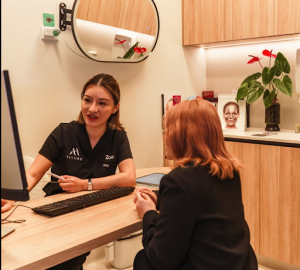
At Aesthetics by Allure, during our cosmetic clinic Burwood consultation for Ultherapy, you can expect a full skin assessment, a review of your medical history, and a conversation about what results are realistic for your skin. Clinical photography may be taken as a baseline.
Any reputable clinic including ours will tell you if Ultherapy is the best option for your concern, or not, and suggest an alternative if it’s not. The consultation at Aesthetics by Allure is the starting point for a treatment plan, not a sales conversation.
Frequently Asked Questions
How long does an Ultherapy session take? Most sessions run between 60 and 90 minutes depending on the number of areas being treated. The consultation is a separate 30-minute appointment beforehand.
Can I go back to work after Ultherapy? Yes. There is no downtime. Most people return to normal activities immediately after treatment, including work.
How many Ultherapy sessions do I need? Most people need one session per year. Some clients with more significant laxity may benefit from a second session, which is discussed at consultation.
How is Ultherapy different from Morpheus8? Ultherapy uses ultrasound energy to target deep structural layers. Morpheus8 uses radiofrequency microneedling to remodel the dermis. They address different depths and concerns. Some clients benefit from both, at different times.
Will I see results straight away? No. Ultherapy works by stimulating your body’s collagen production, which takes time. Visible improvement typically appears from six to eight weeks, with peak results at two to three months.
Is Ultherapy safe? Ultherapy is the only non-invasive lifting procedure with FDA clearance for the face, neck, and décolletage. In Australia, the device is listed on the Australian Register of Therapeutic Goods. Side effects are generally mild and temporary.
How much does Ultherapy cost in Burwood? Pricing at Aesthetics by Allure varies depending on the areas being treated. Contact Aesthetics by Allure directly or book a consultation for a personalised quote.
Does Ultherapy work on the neck? Yes. The neck is one of the primary FDA-cleared treatment areas for Ultherapy. It addresses loose skin and the early appearance of banding or sagging beneath the chin.
Can Ultherapy be combined with other treatments? Yes. It is commonly combined with treatments such as PDO threads, bio-remodelling, or dermal fillers, depending on your goals. Your practitioner will advise on which combinations make sense for your skin at the consultation.
Is there anything that disqualifies me from having Ultherapy? Ultherapy is not recommended during pregnancy, over areas with active skin infections, or in people with certain metallic implants in the treatment zone. A full medical history is taken at consultation to confirm suitability.
Ultherapy will not change your face overnight, and that is the whole point. The process works with your own collagen, not against it, so the result still looks like you, just firmer and more defined. For people who want to address early laxity without surgery, it remains one of the most clinically supported options on the market. The best skin clinic Burwood has to offer is not defined by the equipment on the shelf. It is defined by the team standing behind it, and at Aesthetics by Allure, that team trains the rest of the country.
Book a consultation with Aesthetics by Allure to find out if Ultherapy is right for your skin.